
Money
$765b wiped out – the latest targets of Beijing’s crackdown

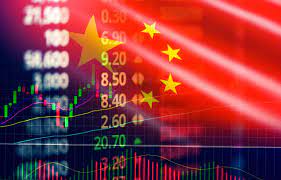

Beijing’s crackdown on US listed Chinese stocks is continuing and it’s having a massive impact on global markets – with $765 billion already erased

The impacted stocks have recorded their biggest back-to-back losses in more than a decade as China increases regulations over its technology and education sectors.
Investors scrambled to price in the growing risks from an intensifying crackdown by Beijing on some of the nation’s industries.
It follows an announcement that the nation will now ban education firms from teaching students about how to make profits in business, raise capital or even how to go public on the share market.
The new rules, published over the weekend by China’s Ministry of Education, apply to what the agency calls “online training institutions.”
“Capitalized operations are strictly prohibited,” the ministry wrote in its order. “Those who have violated regulations shall be cleaned up and rectified,” it added.
Following record highs in February, China’s biggest US listed companies are on track to record their biggest two-day drop since 2008.
High-profile investors, including Ark’s Cathie Wood have begun to unload their shares – with Ark cutting its China stocks from 8 percent in February to just 0.5 percent this month.
Stocks slumped on the mainland and in Hong Kong, with the benchmark CSI 300 Index dropping 3.2% and the Hang Seng Index tumbling 4.1%, the most since May last year.
“Driven by utilitarianism and bound by capital, a large number of out-of-school training institutions in primary and secondary schools, especially those with a wide range of unqualified training institutions, have deviated from the purpose of non-profit education,” said Dong Shengzu, director and researcher at the Shanghai Academy of Educational Sciences, in remarks published on the education ministry’s official website.
Warning to investors:
“I gotta tell you right now China stocks are just falling apart and they are completely off my radar,” Uhl told ticker.
“Whenever stock prices are going down, Brittany, the easiest thing to think about it is nobody wants to own it, and that’s exactly where I’m at right now.”
Uhl says these are the kind of stocks that it doesn’t matter if you’re a long term investor or a short term, short term day trader.
“Being in these stocks is as the wrong place to be. So yeah, absolutely. Right now it’s a it’s a flight to safety out of these tiny stocks.”
Foreign investors have been rattled by the pressures on Chinese tech
This includes moves that regulators made to investigate ride-hailing firm Didi just after its US IPO last month.
Following Didi’s controversial initial public offering, Chinese regulators are reportedly considering handing down serious and unprecedented penalties on the ride-share company

The decision made by Didi to go public has been viewed as an attack against the Cyberspace Administration of China and Beijing’s rule.
Chinese officials have begun an intense on-site investigation at the company in recent days.
Punishments may include a hefty fine, suspension of operations, or even the possibility of requiring a state-owned investor to become part of the organisation.


Investors are turning to U.S. energy shares in droves, capitalizing on surging oil prices and a resilient economy while seeking protection against looming inflationary pressures.
The S&P 500 energy sector has witnessed a remarkable ascent in 2024, boasting gains of approximately 17%, effectively doubling the broader index’s year-to-date performance.
This surge has intensified in recent weeks, propelling the energy sector to the forefront of the S&P 500’s top-performing sectors.
A significant catalyst driving this rally is the relentless rise in oil prices. U.S. crude has surged by 20% year-to-date, propelled by robust economic indicators in the United States and escalating tensions in the Middle East.
Investors are also turning to energy shares as a hedge against inflation, which has proven more persistent than anticipated, threatening to derail the broader market rally.
Ayako Yoshioka, senior portfolio manager at Wealth Enhancement Group, notes that having exposure to commodities can serve as a hedge against inflationary pressures, prompting many portfolios to overweight energy stocks.

Shell Service Station
Energy companies
This sentiment is underscored by the disciplined capital spending observed among energy companies, particularly oil majors such as Exxon Mobil and Chevron.
Among the standout performers within the energy sector this year are Marathon Petroleum, which has surged by 40%, and Valero Energy, up by an impressive 33%.
As the first-quarter earnings season kicks into high gear, with reports from major companies such as Netflix, Bank of America, and Procter & Gamble, investors will closely scrutinize economic indicators such as monthly U.S. retail sales to gauge consumer behavior amidst lingering inflation concerns.
The rally in energy stocks signals a broadening of the U.S. equities rally beyond growth and technology companies that dominated last year.
However, escalating inflation expectations and concerns about a hawkish Federal Reserve could dampen investors’ appetite for non-commodities-related sectors.
Peter Tuz, president of Chase Investment Counsel Corp., highlights investors’ focus on the robust economy amidst supply bottlenecks in commodities, especially oil.
This sentiment is echoed by strategists at Morgan Stanley and RBC Capital Markets, who maintain bullish calls on energy shares, citing heightened geopolitical risks and strong economic fundamentals.


Is EOFY worth the hype?

Discount offering: cheap or strategic?


